
High-impact leadership offsite activities for executive teams
The most effective leadership offsites do not ask every executive to embrace an unfamiliar activity straight away. High-impact leadership offsite activities connect a clear business purpose with formats that help people contribute, whether through focused discussion, a nature walk or a team challenge. If someone is hesitant, offer a meaningful choice rather than making participation feel like a test.
It is reasonable to question activities that seem disconnected from the work leaders need to do. Their value lies not in novelty for its own sake, but in creating space to exchange perspectives, strengthen working relationships and approach decisions differently.
This guide explains how to choose activities around your team’s objectives, respond constructively to hesitation and assess whether an offsite changes what happens back at work. You’ll find practical ways to balance strategic sessions with shared experiences, then turn insights into clear follow-through.
Table of Contents
2. What if team members resist non-traditional offsite formats?
Resistance can signal that an activity’s purpose is unclear, rather than that the team rejects change. Explain the intended outcome, offer a choice of participation where practical, and connect each challenge to a real leadership task. A competition, for example, can reveal how executives share information and make decisions under pressure, provided the debrief focuses on learning rather than winning.
To support trust and psychological safety, choose activities that let people contribute without being singled out or judged. Small-group problem-solving gives quieter participants room to speak, while a guided nature walk can make paired conversations feel less formal. Set expectations beforehand: listen without interruption, treat personal reflections with care, and let people pass on sharing. This makes participation purposeful rather than forced.
Match the format to the outcome. Use a team competition when leaders need to practise collaboration, communication or decision-making across groups. Choose nature-based strategic planning when the priority is fresh thinking: a 20-minute forest walk between strategy modules can create space to reflect before discussion resumes. A skills-based learning retreat suits a defined capability gap, such as giving feedback or resolving conflict; include practice, peer observation and a chance to apply the skill to a realistic scenario.
Build the agenda around one central objective. Open with the strategic question, alternate focused discussion with an activity, then leave time to turn insights into decisions and assign owners. For example, follow a strategy session with a walk, then reconvene to capture priorities. Avoid cramming the day with challenges. Each activity should have a clear purpose and leave room for reflection.
Tell executives what to expect, why you chose the format and how the group will use the results. For physical activities, make the task accessible and team-focused, not a test of athletic ability. When the link between activity and work is clear, unfamiliar formats are easier to engage with, and the learning is more likely to carry into everyday leadership.
3. What is an Offsite Leadership Retreat?
A leadership retreat gives executives protected time away from daily demands to address shared priorities. A single-day offsite can suit a focused decision, but it limits the space for deeper reflection and relationship-building. A multi-day retreat lasting 2–4 days allows leaders to combine intensive work with time to absorb ideas, build trust and discuss difficult issues without rushing each session.
A different setting and pace can give leaders space to hear perspectives that routine meetings may crowd out. The trade-offs are the time and coordination involved, and the risk of an agenda detached from business needs. A blend of indoor and outdoor sessions can balance both: hold a strategy session inside, move outside for a reflective walk, then reconvene to turn observations into decisions. Physical activity should support the retreat’s purpose, not compete with it.
Start with a specific objective, such as agreeing strategic priorities or improving cross-team decisions. Shape the group size around the work: a full-room discussion can surface shared views, while smaller groups give each leader more space to contribute. Proposals can set out distinct formats, such as a focused single-day session, a multi-day programme or a mix of indoor and outdoor elements. Clarify each format’s objective, schedule and intended outputs, without relying on spectacle to justify time away.
Follow-up makes the return on investment visible. Record decisions, owners and measures of progress before the retreat ends, then schedule a 30-day check-in to review what has changed. Compare agreed actions with completed work and note where collaboration or decision-making has shifted. For a retreat shaped around place and shared experience, explore tailored retreat planning as one way to bring the setting and agenda together.
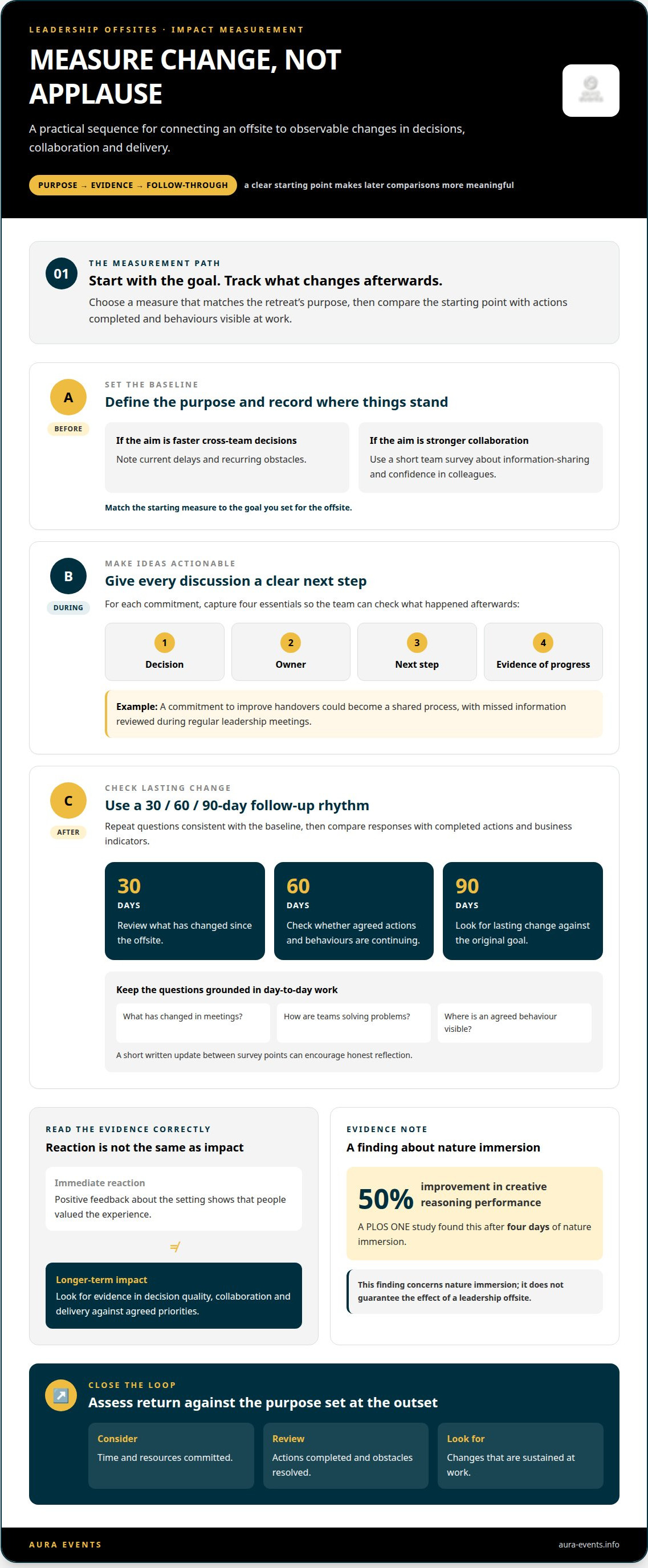
4. Measuring the impact of leadership activities
Measure change, not applause at the closing session. Before the offsite, define its purpose and record a baseline linked to that goal. If the aim is faster cross-team decisions, note current delays and recurring obstacles. If leaders want stronger collaboration, use a short team survey about information-sharing and confidence in colleagues. A clear starting point makes later comparisons more meaningful.
Turn each discussion into an observable action. Record the decision, its owner, the next step and the evidence that will show progress. For example, a commitment to improve handovers might become a shared process, with missed information reviewed during regular leadership meetings. This approach connects the retreat’s ideas to everyday work and gives the team a practical way to assess progress.
Use follow-up surveys at 30, 60 and 90 days after the offsite to track lasting change. Keep questions consistent with the baseline, then compare responses with completed actions and business indicators. Ask leaders what has changed in meetings, how teams are solving problems, and where an agreed behaviour is visible. A short written update can also encourage honest reflection between survey points.
Separate immediate reaction from longer-term impact. Positive feedback about the setting may show that people valued the experience, but it doesn’t prove improved leadership. Look for evidence in decision quality, collaboration and delivery against agreed priorities. A PLOS ONE study found that four days of nature immersion improved creative reasoning performance by 50%; that finding concerns nature immersion, not the guaranteed effect of a leadership offsite.
Finally, assess the return on investment against the purpose set at the outset. Consider the time and resources committed alongside actions completed, obstacles resolved and changes sustained. If progress stalls, identify whether the goal was unclear, ownership was missing or follow-up lacked attention. Define success before the event, then revisit the same measures after leaders return.
4. What makes a leadership offsite activity high impact?
An activity earns its place when it advances a leadership objective and changes how executives work together. A strategy session, for example, should let leaders share insights, test assumptions and receive candid feedback from peers. End with a decision, not just a lively conversation. Record the agreed direction and reasoning so colleagues can explain the choice consistently afterwards. High-impact leadership offsite activities turn discussion into shared understanding and clear leadership choices.
Reflection matters too. Ask each leader to identify one behaviour that helps or hinders the team, then invite peers to offer specific observations. A colleague might be recognised for making space for quieter voices, while another might identify where decisions are being held too tightly. Keep the exchange grounded in examples. That makes development practical and gives the group a shared language for leadership behaviour.
Trust grows when executives understand more about one another than their job titles. Use a structured conversation in pairs or small groups: discuss a formative work experience, a personal strength and a situation where support would help. Then ask each group how those insights could improve collaboration. Understanding colleagues’ backgrounds, strengths and weaknesses can help leaders build a more supportive, cohesive team. These human foundations give high-impact leadership offsite activities meaning beyond the event itself.
Finally, connect the activity to a real challenge the team needs to solve. If departments struggle to coordinate, set a cross-functional task that requires them to combine expertise, explain trade-offs and agree responsibilities. Close by asking what the exercise revealed about the group’s usual habits, then identify one behaviour to practise in upcoming meetings. The most memorable format is not automatically the most valuable: relevance, honest participation and clear application matter.
For an offsite designed around meaningful leadership work, shape a purposeful leadership offsite that gives your team space to exchange ideas and strengthen relationships.
Aura Events: Chamonix Leadership Offsites
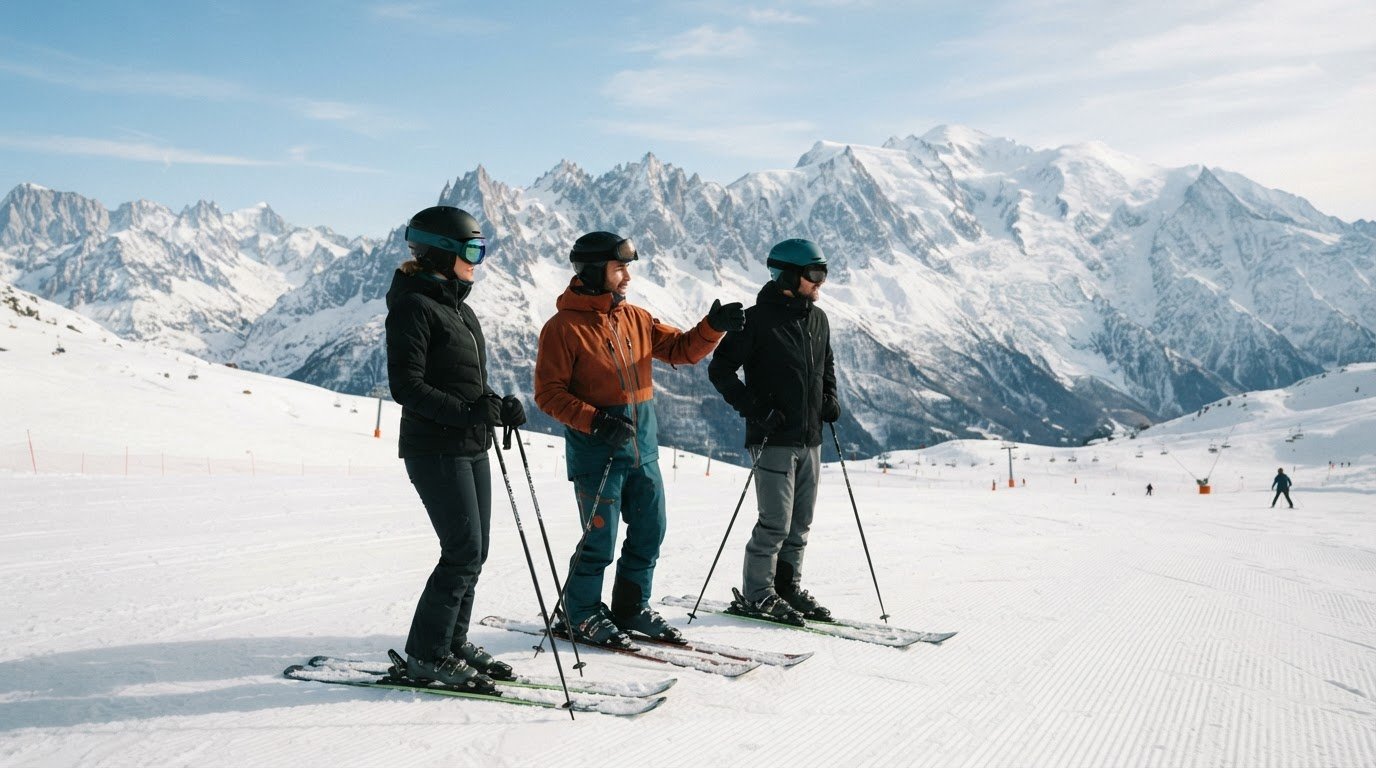
Aura Events designs and manages Chamonix Leadership Offsites for executive teams seeking focused time together beyond daily routines. The retreat format can bring strategic sessions into conversation with guided mountain activities, giving leaders a shared setting to reflect, connect and work through priorities. The right balance depends on your team’s objectives, preferred pace and appetite for outdoor experiences.
If Chamonix suits your plans, Aura Events can help shape the offsite around those priorities, with the setting and programme considered as part of one experience. Contact Aura Events to discuss a Chamonix leadership offsite for your team.
Carry the conversation into your next decision
A retreat’s value continues in the choices leaders make afterwards. Use the renewed perspective to decide which conversation, relationship or strategic priority deserves attention first. Then make that commitment visible in how your team works. The strongest high-impact leadership offsite activities create a useful starting point, not an isolated moment away from the office.
Aura Events offers Ibiza Corporate Retreats and Chamonix Leadership Offsites, with Luxury Villa and Chalet Sourcing as part of its retreat planning. These settings offer different possibilities for bringing an executive team together; the right fit depends on the experience and focus you want for your offsite.
Contact Aura Events to plan your offsite and shape a setting around your team’s priorities.
Give your next leadership conversation the space to become a lasting part of how your team moves forward.
Frequently Asked Questions
What if team members resist non-traditional offsite formats?
Explain the purpose and offer different ways to contribute. Someone reluctant to join a physical challenge could observe how the group plans, then share what they noticed in the debrief. That keeps their perspective in the conversation without making participation feel like a test. A clear briefing beforehand can also reduce uncertainty about what the activity involves and how it connects to the team’s work.
What is a Team Building Retreat?
A team-building retreat sets aside time for colleagues to practise working together away from their usual routines. For example, executives from different functions could tackle a shared case involving a delayed project handover. Afterwards, they can identify where information was lost and agree how to improve cooperation. The exercise is most useful when its lessons relate to a real working relationship or recurring team challenge.
What is an Offsite Leadership Retreat?
An offsite leadership retreat gives an executive group dedicated time to address how it leads the organisation. The focus might be clarifying decision-making responsibilities, aligning leaders behind a strategic shift or strengthening how they support their teams. Unlike a general team gathering, the agenda centres on leadership responsibilities and the consequences of decisions for people across the business.
What’s the ideal duration for a corporate offsite?
Choose a duration that gives the group enough time to do its intended work without overloading the agenda. A focused planning session may need less time than a retreat covering several connected priorities. Leave room for discussion, reflection and decisions instead of filling every moment with activities. The right fit depends on the objectives, the complexity of the topics and the follow-through the programme needs.
Why are leadership away days different to other away days?
Leadership away days address the specific responsibilities of people who shape direction and influence working culture. Executives may need to resolve competing priorities, consider how decisions affect teams and discuss how they support colleagues’ wellbeing and productivity. A session for the leadership group should therefore focus on shared responsibilities and candid peer exchange, not activities designed solely for general team bonding.
What strategic planning exercises work well at leadership retreats?
Scenario planning can help executives test a strategy against different market conditions. Ask groups to describe the assumptions behind a proposed decision, then explore what would change if one assumption proved false. Bring everyone together to compare risks, identify unanswered questions and agree which evidence matters. This exercise helps leaders examine a plan’s resilience before committing resources or communicating direction.
Comments