
Corporate retreat benefits for better cross-team collaboration
A retreat is more than a change of scenery. A corporate retreat takes a team away from its usual work environment, often with an overnight stay, for focused work, connection and time to reset. The corporate retreat benefits are greatest when the format and activities serve a clear purpose, rather than simply filling the schedule.
When colleagues spend most of their time within their own teams, building shared understanding across departments can be difficult. A retreat creates space to exchange perspectives, work through challenges together and strengthen relationships beyond the usual meeting room.
This article explains different corporate retreat formats, from off-site gatherings to on-site programmes, and how each can support specific aims. You’ll also learn how shared activities, focused work sessions and time to connect can help colleagues communicate more openly and collaborate across teams. The setting matters, but thoughtful design gives the experience direction.
Table of Contents
Communication and relationships between colleagues
Colleagues often communicate most easily within their own teams. A company retreat can give people from different departments room to exchange feedback, surface tensions and discuss problems that routine meetings leave untouched. For example, a joint session between sales and operations can clarify where handovers break down and what each team needs from the other. The aim is not simply to talk more, but to make everyday working relationships more candid and constructive.
Shared activities can make those conversations easier. A group challenge gives colleagues a practical task to solve together, showing how they share information, listen and respond under pressure. Afterwards, a facilitated discussion can connect the experience to work: which approaches helped, where assumptions caused friction, and what the team will do differently. Shared experiences can also strengthen connection and loyalty, particularly when people have few opportunities to interact beyond their usual roles.
Training gives a company retreat a clearer business purpose. In the UK, work-related training is exempt from employee tax when it is designed to improve knowledge, skills or personal qualities relevant to the employee’s role. A session on cross-department feedback, for instance, can build a skill participants use in their daily work. The main purpose matters: training whose primary purpose is entertainment, reward or inducement does not qualify for that exemption.
Travel and meals also need to fit the retreat’s purpose. In the UK, travel and subsistence costs are not taxable when the main purpose of a retreat is work-related training. According to HM Revenue & Customs, normal meals, refreshments and leisure provided within a training course are not taxable; other entertainment is subject to the normal staff-entertaining rules. A scheduled working lunch during a skills programme differs from entertainment organised as a reward. Clear agendas help show how each element supports learning and stronger working relationships.
Corporate retreat characteristics and formats
A corporate retreat takes employees away from their usual work environment, often for an overnight stay and focused time together. An off-site retreat uses an external venue; an on-site format might bring remote employees to the main office for training. Either can run for one or several days, with workshops, group sessions and time to reflect.
Effective activities suit the team’s goals and working styles. A mixed-department group might tackle a practical challenge, whilst a leadership team could use facilitated planning sessions to test priorities. A shared outdoor or creative task can offer a different setting for collaboration. A structured team-building programme can give the day a clear focus.
To assess impact and return on investment, set a baseline before the retreat and compare it with follow-up measures. These might include staff feedback, progress against agreed goals or how smoothly departments complete shared projects. Review the results after employees have had time to apply what they learned.
UK teams can choose a city meeting venue, a countryside setting or a coastal location. The right fit depends on the work planned, travel needs and the atmosphere organisers want to create. For example, a rural venue may suit a programme combining workshops with outdoor challenges.
Potential drawbacks include taking employees away from normal work, travel fatigue and a programme that feels disconnected from business needs. Unclear objectives can leave teams unsure how to use the experience afterwards. Allow time to manage outstanding work and connect each session to a practical outcome.
Make the retreat inclusive by considering mobility, dietary requirements, caring responsibilities and different comfort levels with physical or social activities. Offer varied ways to contribute, such as discussion, written feedback and quieter spaces. Accessible facilities and clear information about travel and the schedule help employees prepare.
For a UK retreat, organisers should define its purpose, choose a venue that works for the whole group, and plan travel, sessions and breaks. Consider the annual planning cycle and avoid dates that conflict with critical deadlines. A balanced programme leaves room for focused work, connection and recovery.
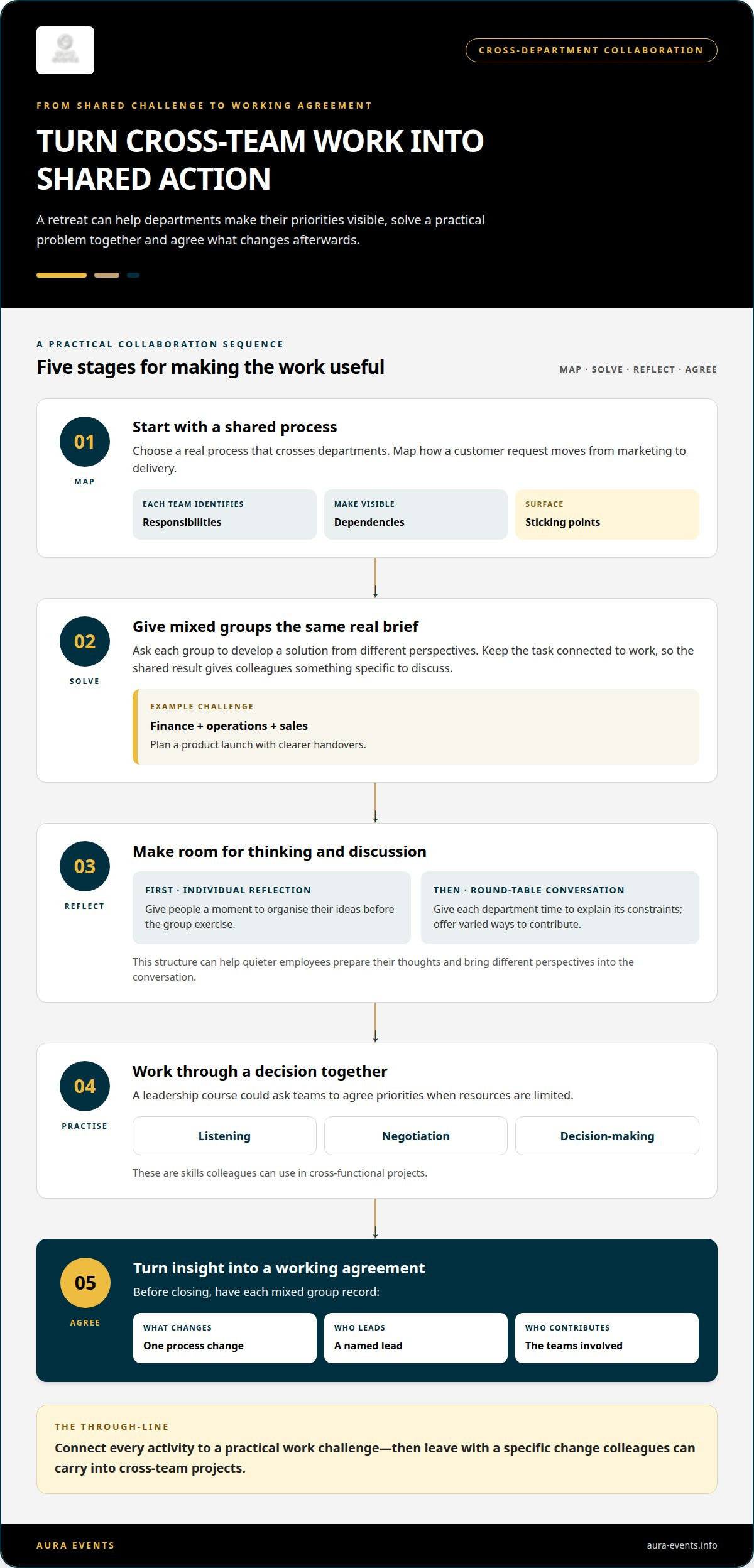
Cross-department collaboration
Collaboration improves when departments understand how their decisions affect others. A retreat can bring people together to map a shared process, such as how a customer request moves from marketing to delivery. Each department identifies its responsibilities, dependencies and sticking points. This makes different priorities visible and gives colleagues a shared starting point for practical problem-solving, rather than leaving the issue to surface in routine meetings.
Structure the work around a real challenge. Form mixed groups, give each the same brief and ask them to develop a solution from their different perspectives. For example, finance, operations and sales might explore how to plan a product launch with clearer handovers. Team-building activities can make collaboration tangible, but the task should connect to work. A shared result gives colleagues something specific to discuss afterwards.
Make room for thinking as well as discussion. A short individual reflection before a group exercise lets quieter employees organise their ideas, while a round-table conversation gives each department time to explain its constraints. During a leadership course, teams might practise agreeing priorities when resources are limited. This develops listening, negotiation and decision-making skills that colleagues can use in cross-functional projects.
Turn retreat insights into working agreements. Before closing, ask each mixed group to record one process change, who will lead it and which teams need to contribute. Schedule a follow-up during existing meetings to review progress and resolve new obstacles. This helps prevent useful ideas from staying in the retreat room. Companies with highly collaborative cultures are five times more likely to be high-performing, so the quality of everyday cooperation matters beyond the event itself.
Can corporate retreats boost employee wellbeing, morale and retention?
A retreat gives employees a deliberate pause from their usual working environment. A day of focused sessions, outdoor activity and unhurried meals creates a different rhythm from back-to-back office meetings. Fresh air and physical activity can support mood, motivation and energy levels. The benefit is not simply time away; it is a programme that gives people room to reset and return with clearer priorities.
Morale also depends on whether employees feel included and heard. Build informal conversation into the schedule alongside structured sessions where people can raise concerns. For example, a facilitated discussion about workload may reveal recurring pressure points that are difficult to surface in routine team meetings. Capture the themes and agree practical follow-up, rather than treating the retreat as a substitute for addressing workplace issues.
Shared experiences can strengthen connection across roles. A guided walk or collaborative cooking session gives colleagues a relaxed setting to interact beyond their usual responsibilities. Choose activities with different levels of physical demand and offer alternatives, so participation does not depend on fitness or confidence. This helps the event feel welcoming, not like another test of performance.
Retention is shaped by what happens after everyone returns. Ask attendees for feedback, then communicate which suggestions will be acted on and who owns each action. If a retreat identifies unclear responsibilities between departments, arrange a follow-up meeting to review changes. Employees are more likely to value the experience when its ideas lead to visible improvements in everyday work.
For wellbeing to remain part of the outcome, balance demanding sessions with genuine downtime. A packed itinerary can leave employees more tired than refreshed; quiet breaks, flexible participation and time outdoors give the programme a more considered pace. Plan an employee-focused retreat around connection, restoration and clear workplace aims.
Aura Events: Ibiza Corporate Retreats
Aura Events designs Ibiza Corporate Retreats for teams seeking space to reconnect, think strategically and work together beyond the office. The setting can bring focused sessions and shared experiences together, with the programme shaped around your organisation’s priorities.
For leadership teams considering a different setting, Chamonix Leadership Offsites offer an alternative. Luxury Villa and Chalet Sourcing and Private Yacht Charters can also help shape the retreat environment around the experience you want to create. The right choice depends on your objectives, preferred atmosphere and how colleagues will spend their time together.
When you’re ready to explore an Ibiza retreat for your team, contact Aura Events.
Turn shared intent into lasting progress
Give the experience a life beyond the dates in the diary. Before planning begins, decide what should feel different in the weeks afterwards: more candid exchanges between departments, a clearer shared priority or a stronger sense of belonging. That outcome helps you judge whether the corporate retreat benefits are carrying into everyday work, rather than staying within the retreat itself.
The next step is to shape a setting and programme around your people. Consider what would help colleagues speak openly, then let that atmosphere guide the schedule. A carefully chosen environment can signal that this is time set aside for meaningful conversation, not another meeting in a different location. Keep the objective clear and make each element serve it.
A retreat need not resolve every challenge at once. It can create the conditions for better conversations to continue back at work. Begin shaping that experience with Aura Events, and give your team a thoughtful setting for its next chapter. Plan a retreat with Aura Events.
Frequently Asked Questions
What Is a Corporate Retreat?
A corporate retreat is a planned gathering away from employees’ usual work setting, created for a defined business purpose. It might bring a leadership group together to review priorities or unite colleagues around a shared project. For example, a team preparing for organisational change could use retreat sessions to clarify responsibilities and agree how decisions will be communicated afterwards.
What are the main benefits of a corporate retreat for employees and businesses?
Corporate retreat benefits can include fresh perspectives for employees and clearer alignment for the business. A retreat gives people space to consider the organisation’s direction and identify where teams need better coordination. Its value grows when discussion leads to follow-through, such as assigning ownership for a decision or scheduling a review after colleagues return to their usual work.
How do corporate retreats improve teamwork, communication and trust?
Corporate retreat benefits can also come from seeing colleagues work together in a new context. For example, a mixed group planning an internal process must explain assumptions, divide responsibilities and agree how to handle disagreement. A facilitator can draw out what helped the group work well. Applying those observations to a live project gives employees a practical way to build trust through consistent actions.
How long should a corporate retreat last, and how often should it be held?
A corporate retreat can last from one to several days, with around three days described as a general ideal. The right duration depends on its purpose: a focused planning session may need less time than a programme combining workshops and shared activities. There is no single schedule for retreats; organisational priorities, team changes and the need for dedicated discussion should guide their frequency.

Comments